Tranzyme Pharma is refocusing efforts on TZP-102, it’s diabetic gastroparesis drug treatment, after the failure of it’s flagship drug Ulimorelin.
Tranzyme Pharma & the FDA were not happy with the results of the Phase III trial results for Ulimorelin. Ulimorelin is similar to Tranzyme’s other drug TZP-102, in that it uses a ghrelin receptor agonist to stimulate motility in the gut. The drug was meant to treat people with delayed gastrointenstinal recovery / post operative ileus which is most often associated with gastrointestinal or gynecological surgery. Continue reading “Tranzyme Still Optimistic About Gastroparesis Drug Despite Stumbling Blocks” »
A dairy cow has tested positive for Bovine Spongiform Encephalopathy on a California farm.
USDA testers found the infected cow while doing regular testing. The cow had died before the tests were done, but according to it’s owner it was not exhibiting symptoms of Mad Cow Disease beforehand. USDA testers have said that the cow was infected with an atypical form of Mad Cow Disease which was not obtained from eating infected cattle feed. Continue reading “Mad Cow Disease Spotted In California” »
A Chinese research study investigated if human derived stem cells can treat induced colitis in mice.
The researchers were specifically interested in studying human umblical cord mesenchymal stem cells which have a poor immunogenic response. This means they are less likely to trigger the immune system into attacking them. At the same time mesenchymal stem cells have potent immunosuppressive qualities, in that they suppress the autoimmune system response. Given these properties, they are being investigated extensively for treatment in those who have autoimmune related diseases. Continue reading “Umbilical Stem Cells May Offer Treatment For Inflammatory Bowel Diseases” »
President Obama’s controversial Patient Protection and Affordable Care Act has divided opinion regarding the direction the United States should take to contain healthcare costs while also expanding coverage.
The Patient Protection and Affordable Care Act aims to give individuals and businesses access to healthcare exchanges that allow them to browse competitively priced healthcare plans. It also limits the ability of health insurance companies to discriminate against people with preexisting conditions. Additionally the act reduces the costs of preventative care, such as physicals, colonoscopies or contraception while also expanding Medicaid eligibility.
While some states are starting to put together their healthcare exchanges in response to the Patient Protection and Affordable Care Act, other states are questioning the validity of the act itself & are taking their case all the way to the Supreme Court. Continue reading “US Healthcare Reform, Costs and Challenges In 2012” »
The owner of IBS Tales, Sophie Lee, has written a new book called “Sophie’s Story” which chronicles her life dealing with Irritable Bowel Syndrome.
I want to tell the absolute truth about IBS, because the reality of this disorder is so often clouded by embarrassment and myths. Perhaps the most pervasive myth is that IBS means mild diarrhea and nothing more. Many people with no experience of IBS wonder why we have such difficulty in coping with our condition. This book shows why. – Sophie Lee, “Sophie’s Story”
It would appear that “Sophie’s Story” is aiming to be an accurate & detailed account of what life with Irritable Bowel Syndrome is like, even if the truth about IBS isn’t pretty. Her story will probably resonate with many who have had similar frustrating & painful experiences while dealing with Irritable Bowel Syndrome.
Sophie has been kind enough to provide me with a review copy that I will read & then review at a later date. You can purchase the book right now on Amazon , Amazon UK
 . For international orders it’s best to check the IBS Tales website for further details.
Research done at Babraham Institute in the UK has shown that diets low or void of certain vegetables leads to a weakening of the protective microbial layer of the intestinal tract causing higher chances of inflammation while reducing healing capacity.
 The researchers focused on intra-epithelial lymphocytes(IELs) which reside just below the epithelial cell layer that makes up the walls of the intestinal tract. IELs play an important role in the immune response to foreign invaders, they are essentially the first line of defense against bacteria trying to setup shop in the intestinal tract or penetrate the intestinal lining. Mice involved in the study were given a specific diet that was devoid of “cruciferous vegetables”. Those given this diet showed a reduction in the number of IELs residing in their gut. They also looked at mice that were genetically modified to not have IELs. Both mice groups showed similar problems with regards to being able to control the microbial flora in their digestive tract as well as showing a slowed ability to heal from damage to the intestinal tract. Continue reading “Mustard, Broccoli & Other Veggies Key To Intestinal Health” »
While Facebook may be the dominate social media platform, many niche social networks are popping up, including those for Crohn’s Disease & Ulcerative Colitis patients.
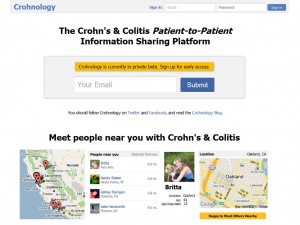
Crohnology Social Networking Site
Crohnology is the creation of Sean Ahrens, a twelve-year veteran of Crohn’s Disease & a software developer who works in the San Francisco Bay Area in California. The look of the site is pretty well polished with features that allow you communicate with & find others who have Inflammatory Bowel Diseases. Of particular note is the ability to list treatments you’ve tried & then rate how well those treatments worked for you. The site is currently in private beta mode, but you can request an invitation by going to the website & entering your e-mail address. Continue reading “Two New Social Networking Sites Look To Help Crohn’s & Colitis Patients Connect” »
Remicade, which is the brand name for the drug Infliximab, was recently approved for use in children by the FDA & a recent study shows positive outcomes can come from it’s use. However trustworthiness, warnings & lawsuits suggests that there are serious risks.
A recent study published in Gastroengology came to the conclusion that those taking Remicade treatments showed better outcomes & had less chances of needing surgery later, than those taking placebo. While this appears to be good news the trustworthiness of the study might come into question because many of researchers involved disclosed ties to pharmaceutical companies, including the manufacturer of Remicade which was also involved in funding the study. Continue reading “Remicade Can Improve Outcomes For Ulcerative Colitis But There Are Risks” »
RedHill Biopharma is looking to start FDA & European drug trials soon for their RHB-104 MAP bacterium treatment for those with Crohn’s Disease.
The Phase II/III FDA drug trials in the US will be lead by Professor David Y. Graham from Baylor College of Medicine located in Houston, Texas. Professor Graham worked for NASA as a physician during the Apollo program, has written over 800 medical articles & is considered to be one of the “Top 50 Most Influential Gastroenterology Professionals of the 20th Century” as rated by Gastroenterology.com.
“Phase II/III” trials differ from more typical separate Phase II & Phase III trials in that the study is more randomized than a typical Phase II trial, as well as there being more participants involved. This allows data from a Phase II/III trial to be used going forward in a Phase III trial. However, Phase II/III trials require more infrastructure & patients, raising costs. Phase II/III trials could be looked at as though they are Phase III trials with stronger stop parameters than a typical Phrase III trial. Given that the drugs used within RHB-104 have gone through Phase III trials in Australia, this is probably why RedHill Biopharma is confident in moving forward with the Phase II/III style of trial. Continue reading “RedHill Biopharma’s RHB-104 MAP Treatment for Crohn’s Disease” »
Jon Reiner’s recently released book about his battles with Crohn’s Disease discusses the impacts of disease on a person as well as society’s relationship with food.
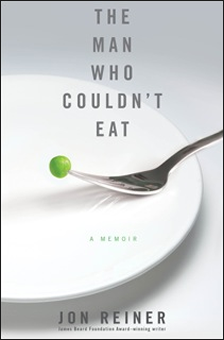
The Man Who Couldn't Eat
Food is not just sustenance. It is memories, a lobster roll on the beach in Maine; heritage, hot pastrami club with a half-sour pickle; guilty pleasures, a chocolate rum-soaked Bundt cake; identity, vegetarian or carnivore. Food is the sensuality of a ripe strawberry or a pork chop sizzling on the grill. But what if the very thing that keeps you alive, that bonds us together and marks occasions in our lives, became a toxic substance, an inflammatory invader? In this beautifully written memoir, both gut-wrenching and inspiring, award-winning writer Jon Reiner explores our complex and often contradictory relationship with food as he tells the story of his agonizing battle with Crohn’s disease—and the extraordinary places his hunger and obsession with food took him. Continue reading ““The Man Who Couldn’t Eat” Chronicles Relationship With Food & Disease” »